
By Matt @ HomeAndPocket.com
And – 1-Minute Financial Truths
August 4, 2025
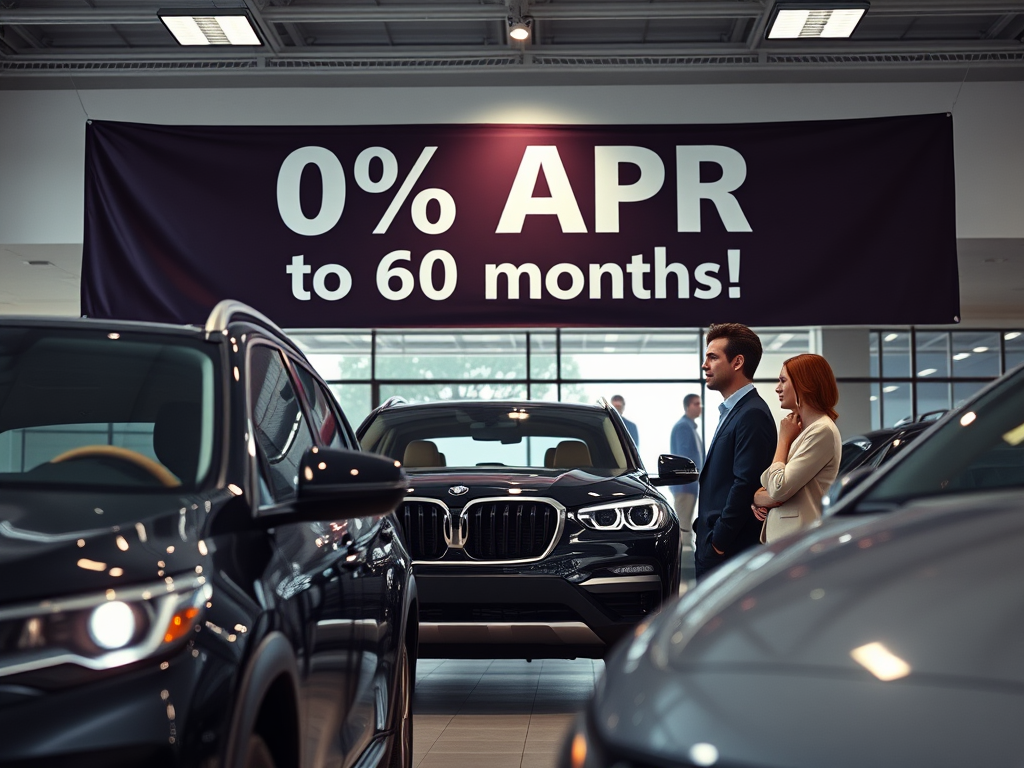
You’ve all seen the commercials every year about this time:
“0% APR for 60 months!”
It sounds like a no-brainer. Why pay interest when the dealer is offering you free money?
But here’s the truth: that 0% loan is anything but free. In fact, you’re likely paying for it—just not in the way you think.
The Catch Behind 0% Financing
When a dealership offers 0% financing, they’re not doing it out of charity. Car manufacturers often subsidize these loans. They do this through partnerships with their financing arms (like Ford Credit, Toyota Financial, or GM Financial).
The dealer gets paid, the automaker boosts sales, and you feel like you scored a great deal.
But here’s the catch: those 0% offers usually come with strings attached. And the biggest one is this:
You’ll likely be required to buy the car at full MSRP.
That means no negotiating the price down, no combining with cash rebates, and no extra dealer incentives.

In most cases, the moment you choose 0% financing, you lose out on thousands in potential savings.
These savings would’ve been available if you paid cash or brought your own financing.
An Example That Hits Home
Let’s say you’re looking at a new SUV that has:
- MSRP: $40,000
- Dealer Cash/Rebate (if you don’t take 0%): $3,000
- Standard interest rate: 5% APR over 60 months
You now have two options:
Option A: 0% APR for 60 months
- Purchase Price: $40,000
- Monthly Payment: $667
- Total Paid Over 5 Years: $40,000
Option B: Take $3,000 off with rebate + 5% APR loan
- Purchase Price: $37,000
- Monthly Payment: ~$698
- Total Paid Over 5 Years: ~$41,900
At first glance, it seems like the 0% is the clear winner. But let’s dig deeper.
If you’re able to negotiate the price down further or shop for a lower interest rate (say, 3%), suddenly Option B becomes much more competitive—and possibly cheaper in total cost.
Also, if you plan to pay off the loan early or refinance later, the math changes again.
What You’re Really Paying For
That 0% interest rate isn’t “free.” It’s simply rolled into the cost of the car.
Instead of paying interest over time, you’re paying a premium upfront in the form of a higher vehicle price.
The manufacturer still makes its profit, just in a more subtle way.
In a sense, you’re pre-paying the interest by paying more for the car to begin with.
The Illusion of a Great Deal
Car dealerships are masters at selling “monthly payments” instead of total cost. A 0% loan gives them a powerful psychological tool:
- “Look, no interest!”
- “Just $500 a month!”
- “Drive away today!”
But focusing only on the APR distracts from the big picture: how much you’re actually paying over time.
It’s the same marketing trick used in furniture stores, electronics retailers, and buy-now-pay-later schemes: emphasize the monthly cost, bury the total cost.
What Should You Do Instead?
Here’s a better approach:
- Negotiate the vehicle price first, as if you’re paying cash.
- Then explore financing options separately.
- Compare the total cost (purchase price + interest paid) between a 0% offer and a rebate with traditional financing.
- Check with your bank or credit union—sometimes their rates are competitive, especially with good credit.
- Be wary of long-term loans (72–84 months), even at 0%. You’ll be underwater longer and possibly pay more in depreciation than the car is worth.
Final Thoughts
0% financing isn’t always a bad deal—but it’s rarely the amazing win it’s advertised to be.
If you’re being forced to pay full MSRP or give up valuable incentives, you may not be saving as much as you think.
Remember, just because something has “0%” in bold font doesn’t mean it’s free.
In the world of car sales, everything has a price—you’re just paying it in different ways.




Leave a Reply