
A Legacy of Staying Private
By: Home & Pocket
May 23, 2025
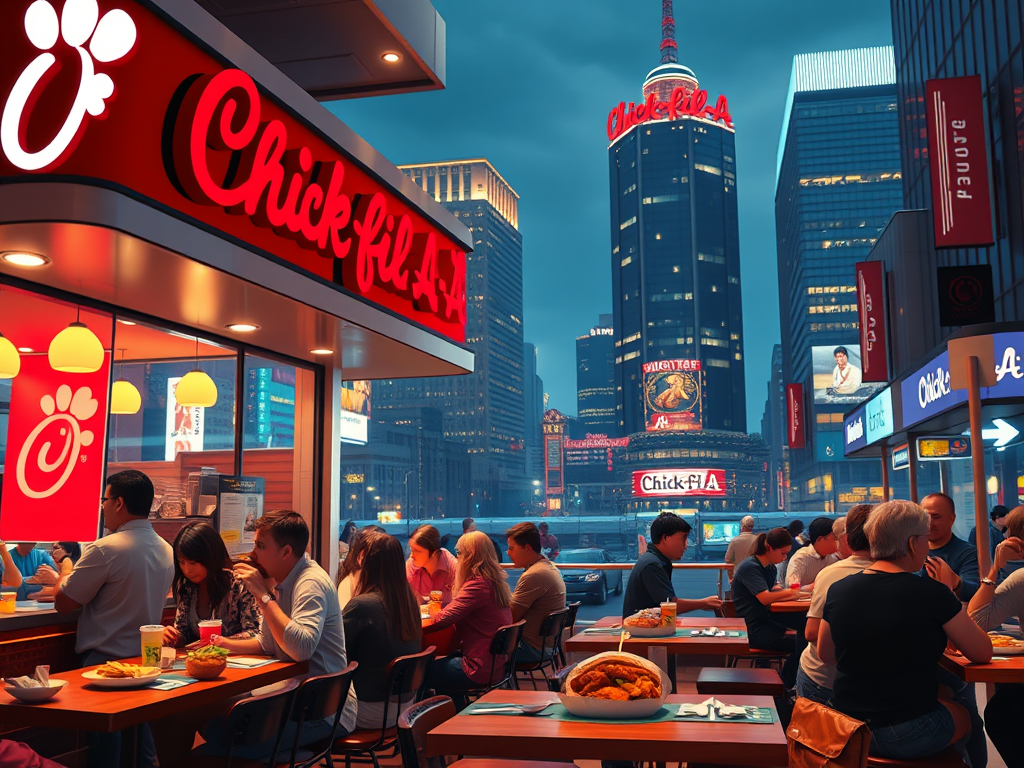
Let’s start with the obvious: Chick-fil-A will almost certainly never go public.
The late founder, S. Truett Cathy, was deeply committed to keeping the company privately owned.
His values—rooted in faith, family, and customer service—shaped a business culture that prioritizes quality over speed, people over profits, and purpose over Wall Street’s quarterly pressures.
Chick-fil-A’s corporate charter makes it clear: the business is to remain privately held.
But what if it didn’t?
What if Chick-fil-A broke from tradition and entered the public market? What kind of investor buzz would it generate?
Could it rival the likes of McDonald’s and Starbucks? And most importantly, what would be the potential consequences—good and bad—of making such a move?
In this purely hypothetical article, we dive deep into Chick-fil-A’s origins, rise, and unmatched performance in the fast-food industry, before exploring the wild but fascinating scenario of what would happen if this chicken powerhouse decided to go public.
A Humble Beginning with a Bold Vision
Chick-fil-A’s story began in 1946 when S. Truett Cathy opened a small diner called the Dwarf Grill (later renamed the Dwarf House) in Hapeville, Georgia.
Just outside of Atlanta, this restaurant became the testing ground for what would eventually become one of the most recognizable fast-food brands in America.

In 1964, Cathy invented the original Chick-fil-A chicken sandwich—boneless, breaded, pressure-cooked chicken breast served on a toasted butter bun with pickles.
It was a simple concept but executed flawlessly, and it became the brand’s signature item.
Chick-fil-A, Inc. was founded in 1967, and the first official Chick-fil-A restaurant opened in Atlanta’s Greenbriar Mall.
Since then, the company has grown at a calculated, deliberate pace—favoring quality over rapid expansion and focusing intensely on the customer experience.
Where Chick-fil-A Stands Today
As of 2025, Chick-fil-A operates over 3,000 restaurants across 48 U.S. states, Washington D.C., Puerto Rico, and a growing number of international locations, including Canada and the U.K.
Despite being closed every Sunday—a policy rooted in Cathy’s religious convictions—the company ranks among the highest-performing fast-food chains in the world.
MORE FOOD READS!
YUM BRANDS – 3 Restaurants in One!
Let’s break down some numbers to understand the scale and strength of Chick-fil-A’s business:
- Revenue: Chick-fil-A generated an estimated $21 billion in systemwide sales in 2023, making it the third-largest fast-food chain in the U.S. by sales—behind only McDonald’s and Starbucks.
- Average Unit Volume (AUV): Chick-fil-A restaurants average over $8.5 million in sales per store per year. For comparison, McDonald’s U.S. locations average around $3 million.
- Daily Visitors: It’s estimated that the average Chick-fil-A restaurant serves 500 to 1,000 customers per day, depending on the location.
- Customer Satisfaction: Chick-fil-A has consistently topped the American Customer Satisfaction Index (ACSI) for the fast-food industry for nearly a decade.
- Growth Strategy: Chick-fil-A is famously selective with franchisees. Out of tens of thousands of applicants annually, only a few hundred are chosen. The company maintains control over the land, building, and equipment, leasing them to franchisees for a low initial investment, allowing it to maintain brand consistency.
Chick-fil-A vs. the Titans: A Performance Comparison
To truly appreciate Chick-fil-A’s position in the fast-food hierarchy, let’s compare it to its most well-known competitors:
| Metric | Chick-fil-A | McDonald’s | Burger King |
|---|---|---|---|
| 2023 U.S. Revenue | ~$21 billion | ~$48 billion | ~$11 billion |
| Average Unit Volume (AUV) | ~$8.5 million | ~$3 million | ~$1.4 million |
| U.S. Locations | ~3,000 | ~13,500 | ~7,000 |
| Customer Satisfaction Index | #1 (consistently) | Lower in rankings | Mid-tier |
| Days Open/Week | 6 | 7 | 7 |
Chick-fil-A operates at a significantly higher efficiency per unit. Despite having fewer locations and being closed one day a week, it rivals and often outperforms other giants in total revenue.
That efficiency, loyalty, and consistency is what makes investors drool at the thought of a Chick-fil-A IPO.
What Would a Chick-fil-A IPO Look Like?
If Chick-fil-A ever decided to go public, it would be one of the most anticipated IPOs in restaurant and consumer retail history. Here’s why:
- Brand Loyalty: Chick-fil-A enjoys one of the most loyal customer bases in the world. From its courteous staff to its famously addictive chicken sandwiches, the company commands devotion on par with tech giants.
- High Profit Margins: The company maintains enviable margins thanks to low franchisee overhead (Chick-fil-A retains ownership of land/building) and exceptionally high per-store revenue.
- Consistent Growth: Chick-fil-A has enjoyed steady, controlled growth year after year. Its foray into international markets signals untapped upside.
- Culture & Values: Although potentially a double-edged sword, Chick-fil-A’s adherence to its founding principles is part of what makes it unique in a crowded fast-food market.
If we were to speculate, Chick-fil-A could be valued between $60 billion and $100 billion at IPO, with shares potentially opening in the $150–$200 range, depending on the number of shares offered and market appetite.
For comparison:
- McDonald’s current market cap: ~$200 billion (2025)
- Starbucks market cap: ~$100 billion
- Chipotle market cap: ~$80 billion
Given its revenue per unit and cultural cachet, Chick-fil-A could be one of the few restaurant chains to enter the stock market with a valuation closer to tech startups than fast-food chains.
What Happens After Going Public?
Here’s where things get tricky. While the financial world would celebrate the IPO, the move could challenge the core values and culture that have defined Chick-fil-A for decades.
1. Pressure for Growth
Wall Street investors typically demand aggressive expansion, which could push Chick-fil-A to grow faster than its current model allows. This could mean:
- Lower standards in franchisee selection
- Dilution of the customer experience
- International overreach
2. Operational Shifts
Public companies must report quarterly earnings, which often leads to short-term decision-making. Chick-fil-A’s Sunday closures, selective franchise model, and community engagement priorities could be challenged in the name of higher profits.
3. Cultural Erosion
The tight-knit, purpose-driven culture of Chick-fil-A might erode under corporate scrutiny and shareholder pressure. Decisions based on faith or mission might give way to policies driven by profitability and public perception.
4. Political & Social Risks
Chick-fil-A has faced boycotts and criticism in the past due to the Cathy family’s personal values and charitable donations. As a public company, it would face even greater pressure to navigate the complex world of social issues and corporate responsibility.
Conclusion: A Dream for Investors, a Dilemma for the Brand
In many ways, Chick-fil-A represents an investor’s dream: unmatched per-store revenue, fierce customer loyalty, and a proven growth model. If it ever chose to go public, it would likely be one of the most successful IPOs of the decade.
But going public isn’t just about numbers. It’s about identity.
Chick-fil-A’s power lies not just in how it serves food, but in why it does what it does.
The company has created a blueprint for success by doing things differently. They close on Sundays.
They prioritize character over capital. They build one of the strongest customer service cultures in the industry.
While the stock market would likely cheer Chick-fil-A’s arrival, it might be the beginning of the end for what makes the company special.
For now, and perhaps forever, Chick-fil-A will remain an enigma—a privately held powerhouse that proves you don’t have to be on Wall Street to be wildly successful.
And maybe, just maybe, that’s why Chick-fil-A is so valuable in the first place.
Final Thoughts for Investors
If you’re an investor with an appetite for fast-food stocks, you’ll have to look elsewhere for now. Say MCD, WEB, or YUM – All good choices.
But the Chick-fil-A story is a valuable reminder that the best businesses aren’t always the ones shouting the loudest from the trading floor.
Sometimes, the best investments are the ones you can’t buy—but can certainly learn from.
As Always, thanks for reading and Please Subscribe Below!




Leave a Reply