
By Home & Pocket
April 30, 2025
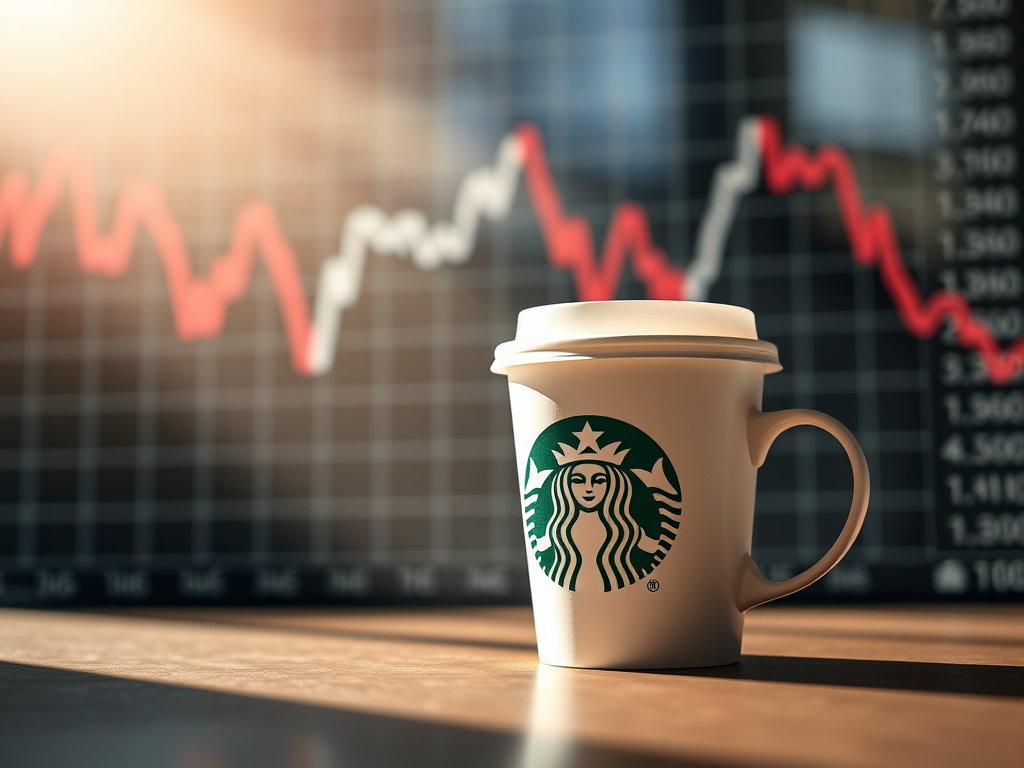
Starbucks (SBUX) has been under serious pressure lately—not just from missed sales targets, but from deeper structural and cultural challenges.
- Upcoming Earnings in October
- New CEO Still Working the “Return to Starbucks” Initiative
- Corporate Goals vs. Employee Values at Stake
The coffee giant is juggling a lot: a relatively new CEO still trying to prove himself, waves of employee strikes, and constant entanglement in nearly every political and social issue dominating headlines.
At the same time, rivals like Dunkin’ and McDonald’s are quietly winning over cost-conscious coffee drinkers.
I’m skeptical of Starbucks’ ability to maintain its competitive edge and return to growth.
After three disappointing quarters, the upcoming October earnings call will be a make-or-break moment.
For me, it’s less about “buying the dip” and more about deciding whether it’s time to scale back my investment—or if the company has finally turned a corner.
FULL Disclosure: I own 20-Shares of Starbucks in the “Freedom Fund”
My current position paid me $48.40 last year and I estimate about $12.20 a quarter right now.
What Went Wrong?
Starbucks’ latest quarterly results reveal a troubling pattern: store traffic and same-store sales are down in the U.S., while growth in China—the company’s largest international market—has stalled. That’s a one-two punch to Starbucks’ global growth story.

The company cited inflation, higher operating costs, and changing consumer behavior as reasons for the slowdown.
But the underlying issue may be simpler: people are opting for more affordable coffee options.
As everyday expenses rise, consumers are increasingly heading to competitors like Dunkin’ and McDonald’s, who offer coffee at lower price points without the premium brand markup.
Can the New CEO Fix It?
Laxman Narasimhan, who took over as Starbucks CEO in 2023 after a successful tenure at Reckitt Benckiser and a brief stint advising Chipotle, has launched a “Return to Starbucks” campaign aimed at rekindling customer loyalty and reigniting the company’s culture.

Unlike Howard Schultz, who built the company on personality and passion, Narasimhan brings a more operational, efficiency-driven mindset—one focused on execution and sustainability rather than nostalgia.
His initiative includes a full-scale revamp of stores to improve workflow and employee experience, digital app improvements to speed up orders and enhance customization, and a renewed focus on genuine, personalized customer service rather than assembly-line transactions.
But this isn’t an overnight fix.
Changing consumer perception, rebuilding barista morale, and modernizing the in-store experience takes time—and patience from both investors and loyal customers alike.
The Bull Case: Why Some Might Buy the Dip
For long-term investors, a 10% drop could look like a discount. Starbucks still operates a powerful brand with a strong global footprint. If Narasimhan’s turnaround plan gains traction, today’s dip could be tomorrow’s bargain.
Additionally, Starbucks has a history of bouncing back.
Its rewards app remains one of the most successful loyalty programs in retail, and its margins—while currently pressured—are still higher than many of its fast-food peers.
And let’s not forget the dividend, which has steadily grown over the past decade and provides a modest cushion for shareholders.

The Bear Case: Why Caution Is Warranted
On the flip side, this drop isn’t just about one bad quarter. It reflects broader concerns about Starbucks’ pricing power in a cost-conscious economy.
If customers continue fleeing to cheaper alternatives, even aggressive marketing and loyalty perks may not bring them back.
China is also a major concern. With economic uncertainty and increased competition in the Chinese coffee market, Starbucks may no longer be the automatic growth story it once was in that region.
Global and Regional Rivals
When it comes to competition, Starbucks faces pressure on multiple fronts.
Globally, giants like McDonald’s and Dunkin’ are winning the affordability battle—offering coffee and breakfast options at lower price points while aggressively expanding their digital loyalty programs.

Closer to home, regional up-and-comers like 7 Brew and Dutch Bros are carving out loyal followings with drive-thru convenience, speed of service, and a fun, community-driven vibe that Starbucks often struggles to replicate.
While Starbucks leans on its brand legacy and café atmosphere, these rivals are targeting what today’s consumer values most: price, speed, and personalization.
Verdict: Watchlist, Not Wishlist
Before I give my external advice, I want to mention that I am a long-time holder of the stock. I earn almost $50 a year in Dividends. I may even pick up a few shares today.
that being said…. If you don’t own any right now.
For now, Starbucks looks like a watchlist stock. The dip is notable, but the fundamentals need to stabilize before this becomes a clear buying opportunity.
If you’re bullish on a turnaround and have a multi-year horizon, nibbling at these levels could make sense—but don’t bet the portfolio on it.
Keep an eye on whether store traffic improves, China growth resumes, and Narasimhan’s changes begin to show results. Until then, enjoy your coffee—maybe from Dunkin’.





Leave a Reply