
By: Matt & His Football Fan Wife @ Home & Pocket
August 31, 2025
When I came to the South for my collegiate years, I was fascinated by the college football realm.
I didn’t understand the devotion from people who had never gone to the school in which they cheered for.
From weddings to vacations, they planned their fall schedules around it.
My wife wouldn’t even let us plan our wedding in the fall unless it fell on her (now mine as well) team’s bye week.
But what really caught my attention was the money, and that was before NIL was a thing.
On the surface, college football looks like marching bands, mascots, and fight songs. But behind the pageantry, it’s a money machine.
In 2024 alone, the SEC and Big Ten each raked in billions from TV deals, ticket sales, and sponsorships.
Players are signing endorsement contracts before they even set foot on campus. Universities are building stadiums that look more like NFL arenas than college fields.
The truth is, college football isn’t just a Saturday tradition anymore—it’s one of America’s most profitable industries.
And like every industry, its growth comes with winners, losers, and lessons for everyday families.
Big Business in a Jersey
When most people think about “Big Business,” they picture Wall Street, tech giants, or oil companies.
But the business model of college football rivals them all.

Consider these numbers:
- The Big Ten’s TV deal with FOX, CBS, and NBC is worth $7 billion over seven years.
- The SEC’s deal with ESPN/ABC runs through 2034 and is worth about $3 billion.
- Notre Dame has had a long-standing deal with NBC with the current contract netting approximately $50 million per year until 2029.
- The University of Texas football program alone generates over $150 million annually, more than many professional sports teams. (Still can’t believe they are in the SEC!)
Let’s break this down and focus on one school to demonstrate the sheer scope of the kind of money coming into to university from football:
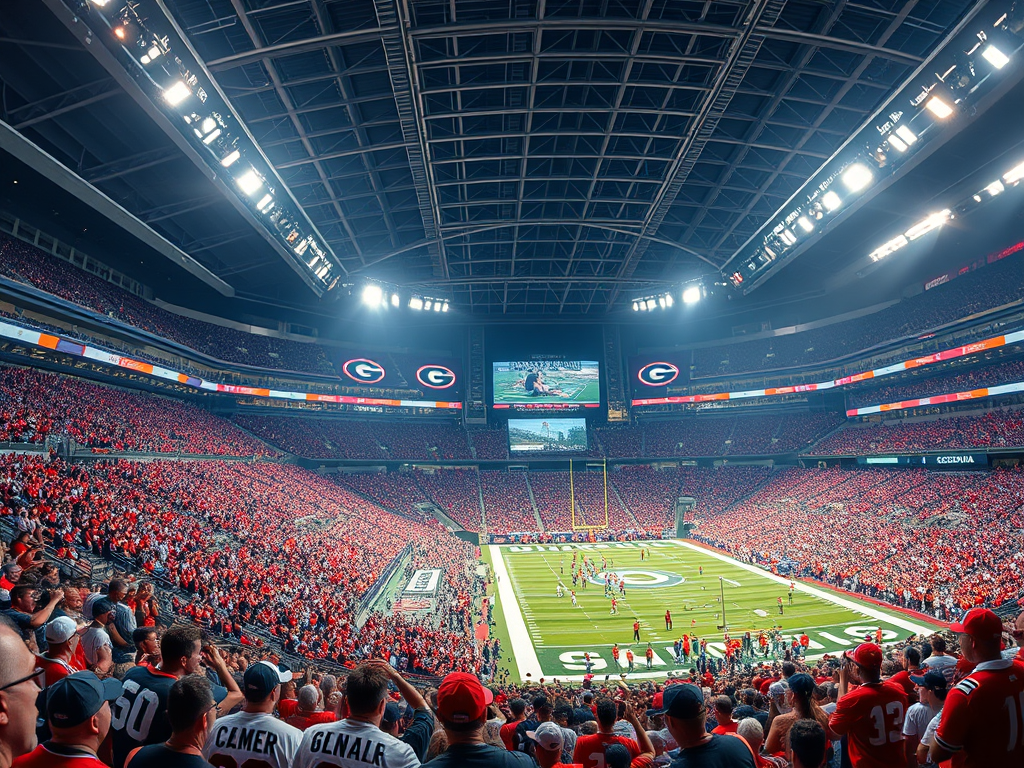
The University of Georgia – One of the top College Football programs in the nations.
Football isn’t just the centerpiece of Georgia’s athletic culture—it’s the financial engine that drives the entire department.
In the 2025 fiscal year, Georgia football generated roughly $147 million of the school’s $192.7 million in total athletics revenue.
That means nearly 76% of all athletic department income comes directly from football, a staggering figure that underscores the sport’s dominance on and off the field.

By comparison, men’s basketball is projected to account for only about 15% of revenue, while every other sport combined struggles to reach 10%.
In short, football isn’t just paying its own way in Athens—it’s footing the bill for nearly everything else.
For universities, football isn’t just about wins and losses—it’s about keeping the lights on.
A powerhouse program funds not only athletic departments but also helps drive student enrollment, alumni donations, and community pride.
The NIL Revolution: Players as Entrepreneurs

One of the biggest shifts in recent years is NIL (Name, Image, and Likeness).
For decades, the NCAA insisted on the myth of “amateurism”—athletes couldn’t profit from their talent.
Today, that’s over.
- Star quarterbacks at top programs can now earn seven figures from endorsements, appearances, and social media deals.
- Even role players are landing sponsorships from local car dealerships, restaurants, and clothing brands.
- Players are foregoing entering the NFL draft to stay in school another year where they’ll make more on their NIL deals than they would in the NFL.
- Some high school recruits are choosing colleges based less on academics or tradition and more on the marketability of their personal brand.
For young athletes, NIL has turned college into an entrepreneurship boot camp, netting some of them more money than pro-Athletes
They’re learning business before they even finish Econ 101.
But for schools, it creates new risks: locker room jealousy, bidding wars, and a growing gap between programs with deep-pocketed boosters and those without.
The Hidden Costs for Families and Fans
College football’s growth comes at a price—and not just for players. For fans, attending a game is no longer a cheap Saturday outing.
- Tickets to a major rivalry game can cost more than a family’s monthly grocery bill.
- Parking near stadiums often runs $40–$100.
- Concessions are marked up to stadium levels—$7 hot dogs, $10 sodas, and $12 nachos aren’t unusual. And let’s not forget the stadiums that have recently decided to start serving alcohol; a single 16 oz beer can cost you $10.
- Add in jerseys, hats, and spirit wear, and a family of four can easily spend $500–$1,000 on a single game day.

Television might be cheaper, but even that has become more expensive.
With conferences getting their own networks specifically for their games, you have to have multiple specialty channels to watch all the games of the season.
Streaming packages and sports networks keep getting bundled into pricier subscriptions.
Watching your alma mater on Saturday now means juggling multiple streaming services, all with rising costs.
The Ripple Effect on Local Economies
Here’s the good news: while fans are spending more, college towns thrive.
A single home game can pump millions into the local economy. Hotels book out months in advance, restaurants overflow, and even gas stations get a boost.
Airbnb’s can make their mortgage payments for the year in just the 4 months of college football. For small businesses, football season can make or break the year.
See what type of properties are best for college towns.
In places like Athens, Tuscaloosa, and Ann Arbor, college football isn’t just entertainment—it’s economic survival.
The ripple effect of one Saturday goes far beyond the stadium gates.
Tradition vs. Commercialization
The heart of the debate is this: has college football lost its soul?
For many, the joy of college football comes from tradition—the tailgates, rivalries, marching bands, and pride in representing your school.
But the explosion of money has shifted priorities. Schools realign conferences not based on tradition but on TV markets.
Kickoff times are set not for fans in the stadium but for primetime television ratings.
It’s fair to ask: is college football still about students and communities, or is it just another entertainment product for the highest bidder?
Check out some of these cool college football traditions that make the sport truly great:
<College Football TRADITIONS >
Texas A&M Midnight Yell – Tens of thousands of Aggies gather the night before every home game for a midnight pep rally, practicing chants and building energy for kickoff.
Script Ohio (Ohio State) – The Ohio State University Marching Band’s famous on-field formation, punctuated by the legendary “dotting of the i.”
“Enter Sandman” at Virginia Tech – Lane Stadium erupts as the Hokies take the field to Metallica’s anthem, with 60,000 fans jumping in unison.
The Tiger Walk (Auburn/LSU/Clemson variations) – Players walk through a sea of fans on their way into the stadium, a sacred pregame moment connecting team and community.

Above: Probably the most famous and coolest – Army v. Navy
Army–Navy Game – More than a rivalry, this is a national tradition. Cadets and Midshipmen fill the stands, and the game embodies service, sacrifice, and pride in country.
Lessons for Families and Finances
So, what can the average American household learn from the economics of college football?
More than you’d think.

- Follow the Money – Just like schools rely on TV deals, your family’s financial health depends on knowing where your income streams are coming from. Diversify, plan, and don’t rely on a single paycheck.
- Tradition Has Value – Even as money floods the game, what keeps fans coming back are the traditions. In family finances, the same is true. Passing down good habits, like saving and budgeting, matters more than chasing every new “money trend.”
- Don’t Get Priced Out of What You Love – Whether it’s football tickets or family vacations, set boundaries. If attending games is too expensive, create your own tradition at home with family watch parties. The memories matter more than the receipts.
- Prepare for Shifts – NIL shows how fast rules can change. The same applies to your financial world. Tax laws, interest rates, and job markets can shift overnight. Stay adaptable.
Keep Reading about Family Finance Here..
The Final Whistle
College football is no longer just about pep bands and rivalries—it’s a financial empire.
That empire has benefits: thriving local economies, opportunities for student-athletes, and entertainment for millions.
But it also has costs: families stretched thin, traditions sacrificed, and communities caught between nostalgia and commercialization.
For households, the lesson is clear: money will always influence the game, but you control how you play it.
Protect your family traditions the way a program protects its playbook—because once they’re lost, they’re hard to rebuild.
Tailgates, watch parties, and family Saturdays matter more than the ticket stubs or streaming subscriptions.
At the same time, invest in your future like a school invests in its facilities.
Just as universities pour millions into stadiums and recruiting to stay competitive, families must put resources into education, savings, and long-term security.
Winning seasons don’t happen by accident, and neither does financial freedom.
And finally, remember the scoreboard.
In football, you can’t just watch the cheerleaders and the band—you have to track the points.
In your financial life, that means keeping a close eye on spending, debt, and income streams. Don’t let lifestyle creep turn your victories into losses.
Because whether it’s on the field or in your wallet, the game never really ends.
There’s always another quarter, another season, another challenge. The question is—will you be ready when the next kickoff comes?
As Always – Thanks for Reading and Please Subscribe Below!




Leave a Reply